

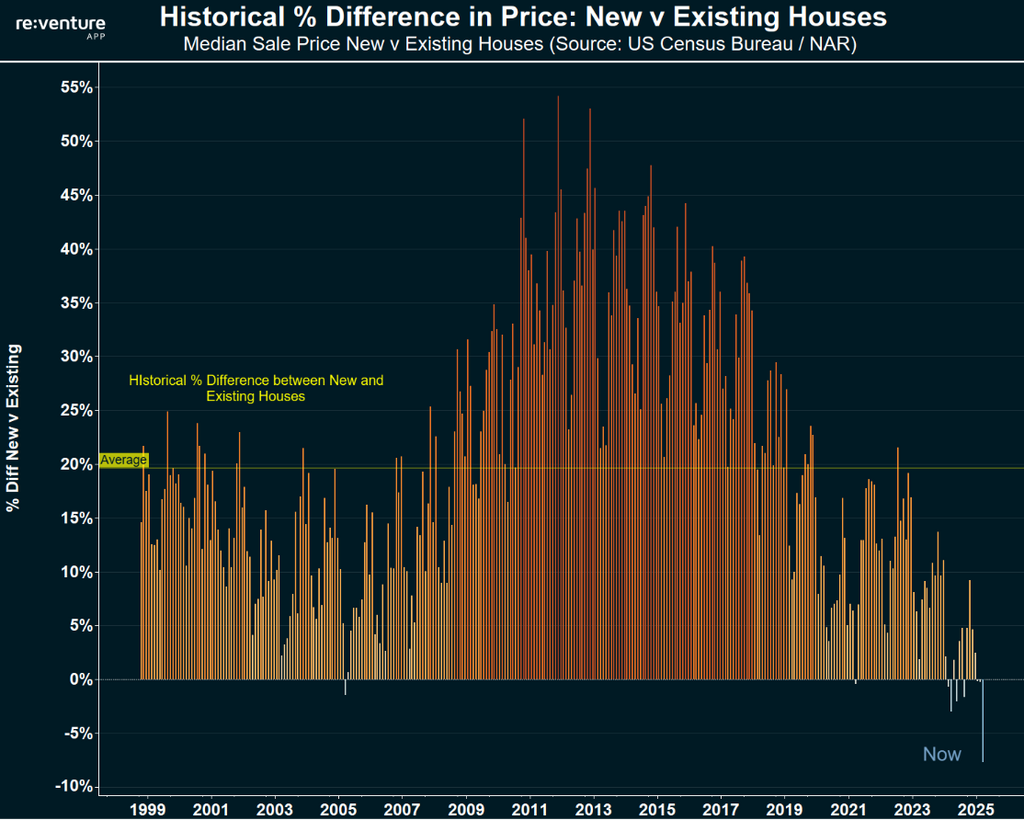
Something is going on in the US housing market. For the first time in 25 years, it is considerably cheaper to buy a new house than an existing one. Over this period, new homes have been 20% more expensive on average, but right now they are 8% cheaper.
Source: Re-venture App
In order to sell their newly built homes, house builders have had to cut prices by 13% from their peak, whereas existing home sellers have yet to adjust. The median price for a new home is $402k compared to $435k for an existing home. House building firms tend to be more in tune with the market than individual homeowners, and this fall in prices is telling us that a slow job market and higher interest rates are squeezing consumers, especially at the mid to low-income end of the market. Historically, cutting interest rates would help juice the market, but this time it’s not so simple. Inflation in US is starting to pick up, in fact if energy prices hadn’t dropped last month, it would be even higher. There are also signs that the impact from tariffs is starting to feed through, and grocery prices remain elevated. This is not just a problem in America – I just paid £4.75 for a jar of Bovril and now I feel violated😢
As the calmness of summer markets starts to fade, all eyes will be on the Federal Reserve meeting in September to see whether or not they cut interest rates. Traders think there is a 90% probability that the Fed will cut rates in September, which seems high, and reminds me of January last year when everyone thought there would be a cut in the first quarter (spoiler alert: there wasn’t).
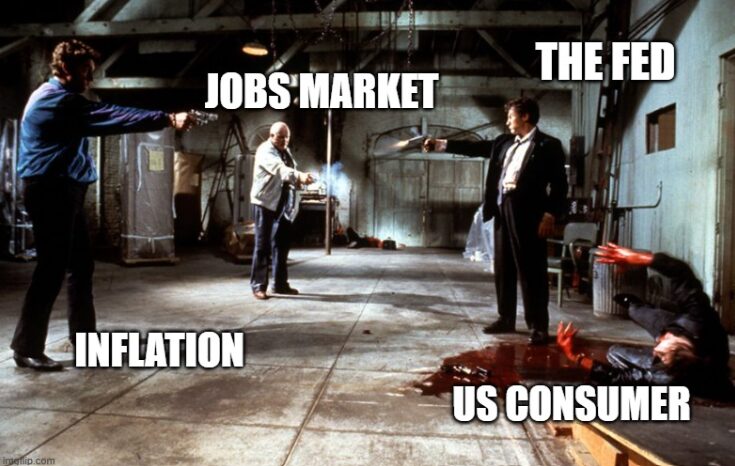
As we wait for new data it is beginning to feel like a standoff. Between inflation numbers, the housing market, the jobs market, and the Federal Reserve, who is going to shoot first? The economy needs interest rates to fall, Trump wants interest rates to fall, but on the other hand, inflation is becoming a problem.
It could be a closer decision than market is suggesting, so positioning our portfolios for one particular outcome seems a risky strategy. As always, we will continue to concentrate on our long-term themes and adjust accordingly as and when the landscape changes.


