

On 26th April 1986, the number four reactor at the Chernobyl nuclear power plant, in Ukraine, went out of control during a planned safety test. This caused a chain reaction in the nuclear core which ultimately triggered an explosion. This explosion was so severe it blew the 1,000 ton steel lid off the reactor, and the ensuing fire burned uncontrollably for days releasing radioactive material into the atmosphere.
The Chernobyl explosion was the biggest nuclear catastrophe of the 20th century. The radioactive fallout from the explosion was the equivalent of 400 bombs that were dropped on Hiroshima, and the disaster was a major contributor to the collapse of the Soviet Union.
If you haven’t seen the HBO drama series ‘Chernobyl’ you should go an watch it. It’s OK, I’ll wait. In the final episode there is gripping court room scene, in which nuclear physicist and Chernobyl investigator Valery Legasov explains how a nuclear reactor works and why the reactor exploded.
I got a C grade in Chemistry at school so won’t embarrass myself by trying to explain how nuclear fission works in any depth; suffice to say the science is complicated, but essentially a neutron collides with a uranium atom which splits it and releases a large amount of energy. This energy heats water into steam, which in turn spins a turbine to generate electricity. As Legasov explains “The only thing that happens in the nuclear reactor is that reactivity, which generates power, either goes up or it goes down. That’s it. All the operators do is maintain balance.”
Central Bank Control Room
Similar to the engineers at nuclear reactor, central bankers and governments are aiming to keep the economy in balance, using interest rates as a tool to maintain this balance. When the economy is running too hot, they aim to control inflation by raising rates, which discourages borrowing and reduces demand for goods and services. When the economy is cooling down, central bank look to stimulate growth by lowering interest rates, making it cheaper to borrow.
Over the longer term this trade off generally works in keeping balance, but in the short term these objectives can come into conflict, for example, economic growth begins to look weak at the same time inflation is picking up. In this scenario, should the bank accept higher inflation and cut interest rates, or raise interest rates to cool inflation but possibly push the economy into recession.
The US Federal reserve aims to maintain this balance through it’s dual mandate. It aims to keep unemployment as low as possible whilst keeping consumer inflation at or near two percent. Based on this mandate, the recent intertest rate cut of 0.5% would suggest the Fed is currently more concerned about jobs than inflation. Or does it? Unemployment remains near historic lows, markets are around all-time highs, and the economy appears fairly robust. Are the control panels flashing red in other areas?
Insta (bility) stories
On that fateful night at Chernobyl, a series of bad decisions by the engineers created the conditions for an unstable reactor, and by violating procedures and cutting corners during the safety test they took the system to the brink. By the time the danger was realised it was already too late. Their only option (they thought) was to push the failsafe button, which would instantly shut the reactor down. However, due to a fatal design flaw, the emergency shutdown procedure had the opposite effect. Executing the failsafe accelerated reactivity, the temperature skyrocketed and the reactor exploded. It was the perfect storm of human error and unknown risk. The engineers took the system to the limit thinking they always had a handbrake.
Since the Second World War, the US dollar has been the global reserve currency. It is always in demand from banks and companies across the world, and is the most commonly used currency in global trade. This gives the US government a unique advantage, as it can to operate with far less fiscal discipline for longer periods than other countries. One of the reasons the US economy has performed so well over the past decade, has been its ability to spend to generate economic growth.
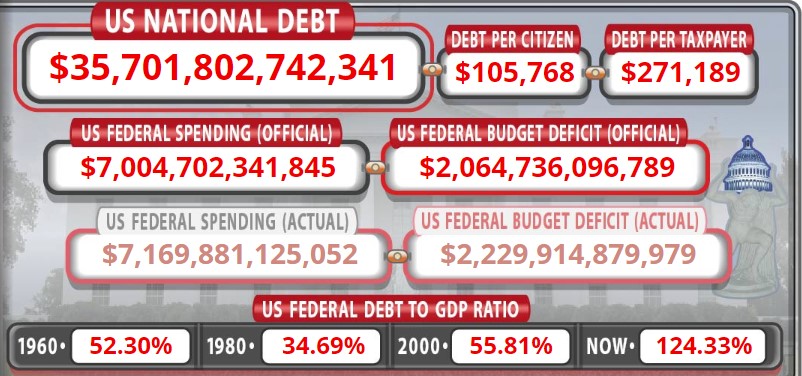
In the last 20 years the US national debt has increased from about $8 trillion to $35 trillion (and growing). The current average interest expense on US government debt is now over $3 billion a day. A DAY. Given this level of debt you might be expecting either of the candidates for the upcoming election to spell out how they will look to rein it in. You would be wrong. They both want to keep spending.
This not sustainable forever. The interest payments on this debt are making up a greater and greater share of government spending and therefore less and less on ‘productive’ spending, which stimulates the economy. So the government borrows more to keep the economy moving but also therefore increases the interest payments. This is similar to taking out a credit card to pay the interest on your current credit card. Eventually the system becomes unstable, so the only option is to push the failsafe button… cut interest rates. This is the inevitable move. There are two big problems with this is approach though. US dollar weakness and rising inflation. After the financial crisis in 2008 central banks used the same approach via Quantitative Easing, which didn’t end up being inflationary. But that was then, and this is now. Global debt is about to hit $100 trillion, according to the IMF. The amount of money in the system, which is already facing higher inflationary pressures, is pushing the system to the brink, and central banks have limited capacity to fight it.
This dynamic likely explains why many foreign central banks have been shifting their reserves to gold over US Treasuries. Investors also flock to gold when they expect the US dollar to lose value. Gold hitting it’s all time nominal high is a signal that the dollar is under pressure. Big time. We maintain our positions in gold, gold equities and other commodities to hedge against inflation and currency debasement. Equally, in periods of dollar weakness emerging market equities tend to perform well, so we maintain our overweight position.
“How Did You Go Bankrupt?” “Two Ways. Gradually and Then Suddenly.”
The role of the US dollar as a reserve currency is not going to change overnight, but markets do require confidence that their central banks and governments are in control of the situation. Just ask Liz Truss what happens if confidence is lost. Just like the engineers at Chernobyl, the US government has created an unstable system, and if inflation starts to creep back up at the same time the economy starts to slow, then the situation could get out of control. I defy anyone to go on to the live US debt clock website (usdebtclock.org) and not get a little freaked out by the numbers rising before your eyes.
Chernobyl was a tragic accident, with thousands of deaths caused by exposure to the radiation. Radioactive wastes with half–lives lasting tens of thousands of years continue to poison the environment of the surrounding area and affect the genetics of the people who live within it. The tragedy is further compounded as it set back progress on nuclear energy for decades. Nuclear is one of the cleanest and most reliable forms of energy, and will inevitably play an essential part in reducing global carbon emissions.
In recent years opinion has started to shift back, with many countries now looking to increased their nuclear energy capacity, China alone has 30 reactors under construction. Microsoft has recently signed a 20-year deal to purchase power from the Three Mile Island energy plant, site of the worst nuclear accident in US history. When the reactor reopens it will provide the company with a clean source of energy for the power intensive data centres needed for artificial intelligence. That is one hell of a PR turnaround, and is a sign of the progress now being made. Nuclear energy currently provides about 9% of the world’s electricity but we would expect this to increase over the coming years.
The courtroom scene in ‘Chernobyl’ was compelling and powerful. It clearly explained a complicated subject in simple terms for those of us who are not nuclear physicists, but it wasn’t dumbed-down. This is a delicate balance. We always try to achieve this with our articles, and hopefully we manage to get that balance right. And we hope you all enjoy it, too!


