

When you think of great live band, what image come to mind? The charismatic frontman engaging the crowd, or a lead guitarist shredding a solo? In fact, I would imagine most people could name at least ten famous singers and guitarists. Go ahead, try. I will wait. Now try to name ten bass players or drummers. Not so easy is it? The bass and the drums, sometimes referred to as the ‘rhythm section’, provide the basic pulse and groove of a song. They are the backbone of the band. For every Freddie Mercury and Brian May there is a John Deacon and Roger Taylor backing them up. A band needs balance.
The same is true in portfolio management. Equities will usually provide the greatest long-term returns, but they can also be very volatile, so portfolio managers utilise other assets that can hedge this volatility and provide balance in the portfolio. Assets such as bonds, hedge funds and cash are typically used to dampen the volatility and keep things ticking along. They provide the balance.
A couple of years ago we wrote an article about how the 25 year complimentary relationship between equities and bonds had gone sour. The double whammy of Covid lockdowns ending and Russia invading Ukraine pushed the global economy into an inflationary environment and, combined with the high levels of government debt, bonds were no longer giving us balance.
We therefore reduced our exposure to bonds and invested in gold, silver, and energy transition metals in our ‘alternatives’ allocation. This has been very profitable for our portfolios, but the conflict in the Middle East has thrown us a curveball.
Historically, gold has also been one of the best portfolio hedges when war breaks out. But not this time. Gold had its worst month since 2013. In addition to concerns over interest rate hikes there are clearly liquidity issues for investors, especially those in the Middle East. In periods of market stress, gold is often sold not because it is fundamentally weak, but because it is one of the most liquid assets investors can sell to meet margin calls or rebalance portfolios. This dynamic appears to have played an important role in the recent correction.
What about hedge funds, I hear you ask. An effective hedge strategy should be able to generate a positive return regardless of market direction. Well, the Barclays Hedge Fund Index fell 3.4% in March, which was one of the worst monthly drawdowns in over four years, and exposed the uncomfortably high correlation risk that many of these strategies carry.
The supply shock in energy markets has created short-term pressures for precious metals, bonds, hedge funds and equities, alike. The chaotic nature of the US president combined with Iran’s stranglehold on the Strait of Hormuz, is a dangerous recipe for volatility over the coming months.
We need to enhance our rhythm section.
Hammer To Fall
The disruption caused by this conflict is likely to translate to higher energy prices for the medium term, so we need to think how to position our portfolios over this period.
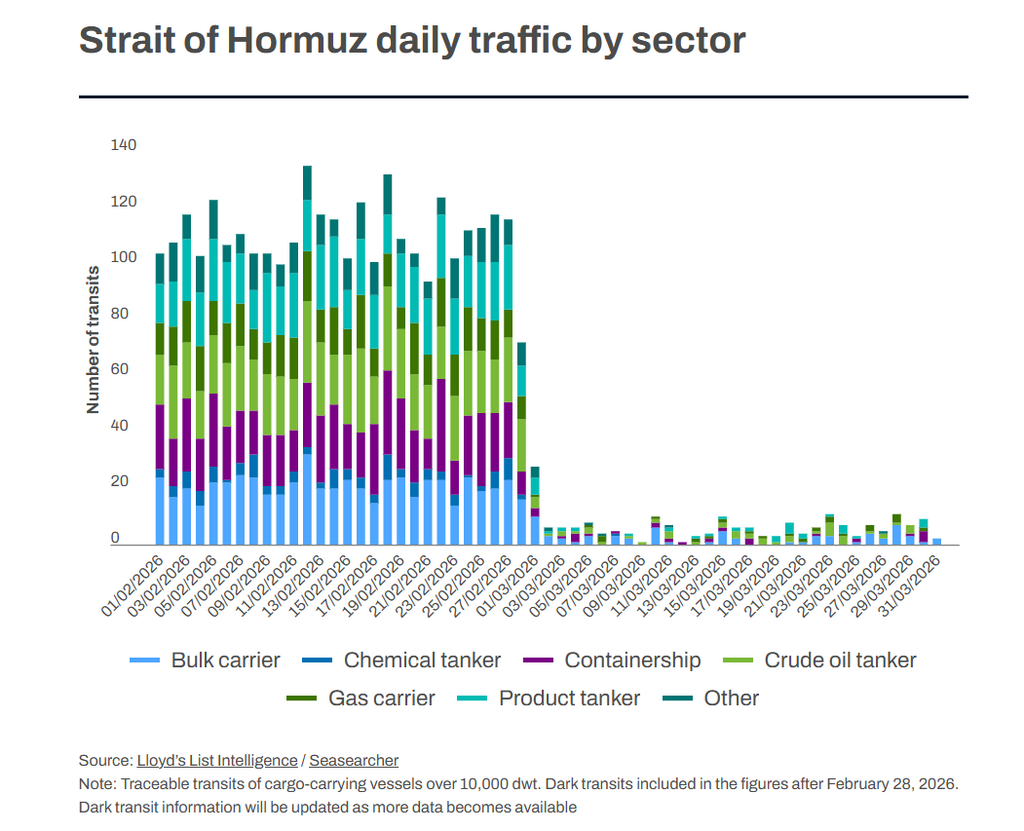
Tanker traffic flow in the Strait of Hormuz currently remains non-existent, and even if the war ends tomorrow, it will take a few months to increase production and resume normal traffic. Inventories will act as a buffer, but prices will remain high in order for the market to absorb the physical loss of around 10% of total world oil supply.
Higher energy prices also push up input costs or many industries, such as airlines and freight companies, not to mention all the products which are affected by the shortages of energy by-products such as fertilizer, helium, chemicals, and plastics.
The market spent the first few weeks of the conflict focused on inflation, but last week a different fear surfaced… could higher energy prices lead to recession? This has left central banks in a bind. If they raise rates to fight inflation, they risk crushing an already weakening economy. If they hold or cut interest rates to stimulate growth, they risk letting inflation get out of control.
Having a balanced portfolio split between long-dated bonds and equities is not going to work in this market. We are still bullish on precious metals but in the short term we feel the most effective hedges for our portfolios is energy companies, broad commodities, and good old-fashioned cash.
The energy sector is still only 4% of S&P 500, but given its growing strategic importance we would expect investors to start taking an interest. The addition of a broader commodity fund that includes energy and agriculture should also be a beneficiary of this environment, and cash is, well, cash is king. The ultimate ‘steady-Eddie’ bass player. In short, we have positioned the portfolios for higher energy costs, higher inflation, and weaker economic growth in the near term.
I Want To Break Free
Looking further out, we also need to consider the secondary effects of this energy crisis, and specifically how countries respond regarding their energy policies. Given the level of uncertainty and complexity in the Gulf, this is no easy task, but it is clear the conflict will only reiterate the importance of energy security. It should also expedite the transition away from fossil fuels and bring certain ‘strategic’ industries back onshore (see our article on copper ). Renewables are no longer purely a decarbonisation tool. They are increasingly viewed as a strategic asset that can support grid reliability and sovereign energy independence. We maintain our exposure to real assets and energy transition investments which will benefit from increased government spending and private investment.
Nobody can reliably forecast what will happen in the Middle East in the coming weeks, months or years, but we all need to have a game plan.
Portfolio managers are not paid to forecast, but to understand what is happening in the present and adapt. Having a dynamic investment process and the ability to react quickly allows us to adapt to fast changing situations, and we continue to monitor how this one unfolds.
In our quest to enhance our ‘rhythm section’, perhaps we should take a lesson from the fictional rock band Spinal Tap, whose numerous drummers all died in mysterious circumstances over the years. If you lose your drummer in a freak gardening accident (best left unsolved), or they choke on vomit (of unknown origin), or they explode on stage, then keep calm and get new drummer. But turn the guitars up to 11.


